
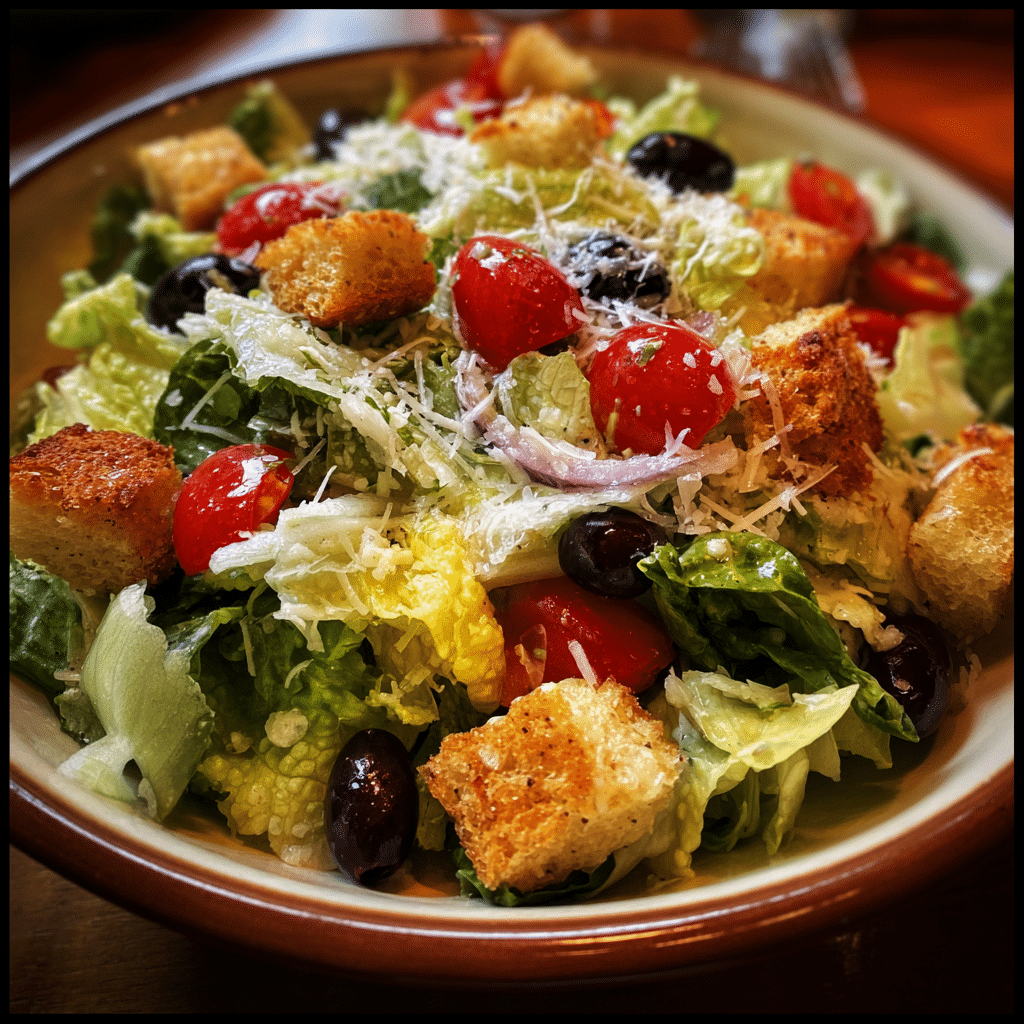
The Olive Garden salad recipe has become legendary crisp lettuce, tangy Italian dressing, and those irresistible croutons that keep you reaching for just one more bite. But here’s the truth: you don’t need a restaurant reservation to enjoy this iconic salad. I’m Sam from dishfoody.com, and I remember the first time I tried recreating this at home.
My family was skeptical could I really capture that signature taste? When I served it at dinner, the room went quiet except for the sound of forks hitting bowls. My husband looked up and said, “This is exactly it.” That moment reminded me why I love cooking: it’s not just about feeding people, it’s about recreating those special experiences that bring us together.
At Dishfoody, I’ve spent years breaking down restaurant favorites into achievable home recipes, and this Olive Garden salad has become one of my most requested dishes. Whether you’re planning a quick weeknight meal or hosting friends, this salad delivers restaurant-quality results with ingredients you probably already have.
In this guide, I’ll walk you through selecting the freshest greens, crafting that perfect dressing, and mastering the small touches that make this salad unforgettable. We’ll cover ingredient selection, the exact steps to assemble your salad, pro tips for that authentic taste, and creative variations to keep things exciting.
Why This Olive Garden Salad Recipe Works
For years, home cooks have tried to crack the code on this beloved salad, but many versions fall flat with bitter lettuce or watery dressing. This Olive Garden salad recipe works because it focuses on three essential elements: freshness, balance, and simplicity.
• Uses affordable, easy-to-find ingredients: You won’t need specialty grocery stores or expensive imports. Standard supermarket produce and pantry staples create the magic.
• Ready in just 15 minutes: From washing lettuce to tossing the final ingredients, this salad comes together faster than most side dishes, making it perfect for those busy evenings when you need something fresh and satisfying.
• Perfect for any occasion: This versatile salad works equally well alongside grilled chicken broccoli bowls for a light dinner, as part of a holiday spread, or even as a standalone lunch when you top it with grilled vegetables or chickpeas.
• Crowd-pleasing flavor profile: The tangy-sweet dressing, crisp vegetables, and savory cheese create a balance that appeals to picky eaters and food enthusiasts alike.
The secret isn’t in exotic ingredients—it’s in the ratios, the freshness of your vegetables, and understanding how each component plays its role in the final dish.
Choosing the Right Ingredients for Your Olive Garden Salad Recipe
Success with this Olive Garden salad recipe starts at the grocery store. The quality and freshness of your ingredients directly impact the final taste, and knowing what to look for makes all the difference.
Best Lettuce Varieties for This Recipe
The foundation of any great salad is the greens. For an authentic Olive Garden salad recipe, you’ll want a mix that provides both texture and flavor without overwhelming the dressing.
Iceberg lettuce forms the crisp base—choose heads that feel heavy for their size with tightly packed, vibrant green outer leaves. Avoid any with rust-colored spots or wilted edges. Iceberg provides that satisfying crunch and holds up well to dressing without wilting immediately.
Romaine lettuce adds structure and a slightly more robust flavor. Look for bright green leaves with firm ribs. The inner leaves tend to be sweeter and more tender, while outer leaves offer more bite. I typically use the middle portion of romaine heads for the best balance.
Red cabbage contributes color and an extra crunch dimension. Select heads with tight, glossy leaves and vibrant purple coloring. You’ll only need a small amount—about a quarter cup of finely shredded cabbage per serving—but it makes a visual and textural difference.
Buying Tips for Fresh Vegetables
When shopping for your Olive Garden salad recipe ingredients, timing matters. Shop during midweek when produce turnover is highest, and stores have just restocked from weekend crowds.
For tomatoes, choose firm ones with deep red color and a slight give when gently squeezed. Avoid any with soft spots or wrinkled skin. Roma tomatoes work beautifully because they have fewer seeds and more flesh, which means less water diluting your dressing.
Red onions should feel firm with dry, papery skin and no soft spots. The pungency of raw onion can overpower a salad, so I always slice mine paper-thin and soak the slices in ice water for 10 minutes before adding them to the bowl. This removes the harsh bite while keeping the sweet onion flavor.
Black olives vary significantly in quality. I prefer whole pitted olives that I slice myself rather than pre-sliced versions, which often taste metallic from can interaction. Look for olives with a glossy appearance and firm texture.
Substitutions for Dietary Preferences
This Olive Garden salad recipe adapts beautifully to various dietary needs without sacrificing flavor.
For dairy-free diets: Replace the Parmesan cheese with nutritional yeast for a similar umami flavor, or simply omit it and add extra croutons for texture.
For gluten-free requirements: Swap regular croutons with gluten-free versions or toasted chickpeas seasoned with Italian herbs. The chickpeas add protein and a satisfying crunch that rivals traditional croutons.
For low-carb preferences: Skip the croutons entirely and add toasted pepitas or sunflower seeds for crunch without the carbs.
The beauty of this salad lies in its adaptability—you can make it work for almost any dietary restriction while maintaining that signature Olive Garden taste that makes it so special.
Ingredients & Prep for the Perfect Olive Garden Salad Recipe
Proper preparation transforms good ingredients into an exceptional Olive Garden salad recipe. This section covers everything you need and how to prep it for maximum flavor and texture.
Essential Vegetable Preparation
Start with 8 cups of mixed greens (about 6 cups iceberg and 2 cups romaine). Tear the lettuce by hand rather than cutting it with a knife metal blades can cause browning and affect freshness. After tearing, spin the greens thoroughly in a salad spinner. Excess water is the enemy of a well-dressed salad, diluting your dressing and making everything soggy.
1/4 cup thinly sliced red cabbage adds color and crunch. Use a mandoline or sharp knife to achieve paper-thin slices. Thicker pieces overpower the delicate lettuce and create an unpleasant texture contrast.
2 Roma tomatoes, cut into wedges, provide juicy sweetness. Remove the seeds if they’re particularly watery just cut the tomato in half and give it a gentle squeeze over the sink. This prevents excess liquid from pooling at the bottom of your bowl.
1/4 red onion, sliced paper-thin, delivers that characteristic bite. Remember to soak these slices in ice water for 10 minutes, then pat them completely dry before adding to your salad.
1/2 cup black olives, sliced into rings, contribute briny depth. Pat them dry with paper towels after draining to remove excess moisture and prevent dressing dilution.
1/4 cup pepperoncini rings add that signature tangy kick. These pickled peppers are non-negotiable for an authentic Olive Garden salad recipe taste. Drain them well before adding.
The Signature Dressing Components
The dressing makes or breaks this Olive Garden salad recipe. Here’s what you’ll need:
1/2 cup mayonnaise creates the creamy base. Full-fat mayonnaise works best low-fat versions often separate and create a watery consistency.
1/3 cup white vinegar provides acidity and tang. This brightens all the other flavors and cuts through the richness of the mayonnaise.
2 tablespoons vegetable oil adds body and helps the dressing coat the greens evenly without feeling heavy.
2 tablespoons corn syrup or honey balances the acidity with subtle sweetness. This is the secret ingredient many home versions miss it rounds out the flavor profile perfectly.
2 tablespoons grated Parmesan cheese contributes savory umami notes that make this dressing so crave-worthy.
2 tablespoons Romano cheese adds a sharper, more complex cheese flavor that distinguishes this from ordinary Italian dressings.
2 teaspoons lemon juice brightens everything with fresh citrus notes.
1 1/4 teaspoons Italian seasoning delivers that herb-forward flavor we associate with Italian cuisine.
1 teaspoon garlic powder provides savory depth without the harshness of raw garlic.
1/2 teaspoon onion powder adds another layer of savory complexity.
1/4 teaspoon salt and 1/8 teaspoon black pepper season everything perfectly.
Mix these ingredients in a bowl with a whisk until completely smooth. The dressing should have a pourable consistency—if it’s too thick, add water one teaspoon at a time until it reaches the right texture. Make this at least 30 minutes before serving to allow the flavors to meld, or prepare it up to three days in advance and store it in an airtight container in the refrigerator.
Crouton Preparation
2 cups of cubed Italian or French bread create those restaurant-quality croutons. Day-old bread actually works better than fresh because it has less moisture and crisps up beautifully.
Cut your bread into 3/4-inch cubes for the ideal size—large enough to provide substantial crunch but small enough to eat comfortably in a forkful of salad.
Toss the cubes with 2 tablespoons olive oil, 1/2 teaspoon garlic powder, and 1/4 teaspoon salt. Spread them in a single layer on a baking sheet and bake at 375°F for 10-12 minutes, tossing halfway through, until golden brown and crispy. Let them cool completely before adding to your salad—warm croutons will wilt your lettuce.
For an even distribution of flavor, I recommend making your dressing first, letting it sit while you prep vegetables, then preparing croutons last so everything comes together at the perfect moment.
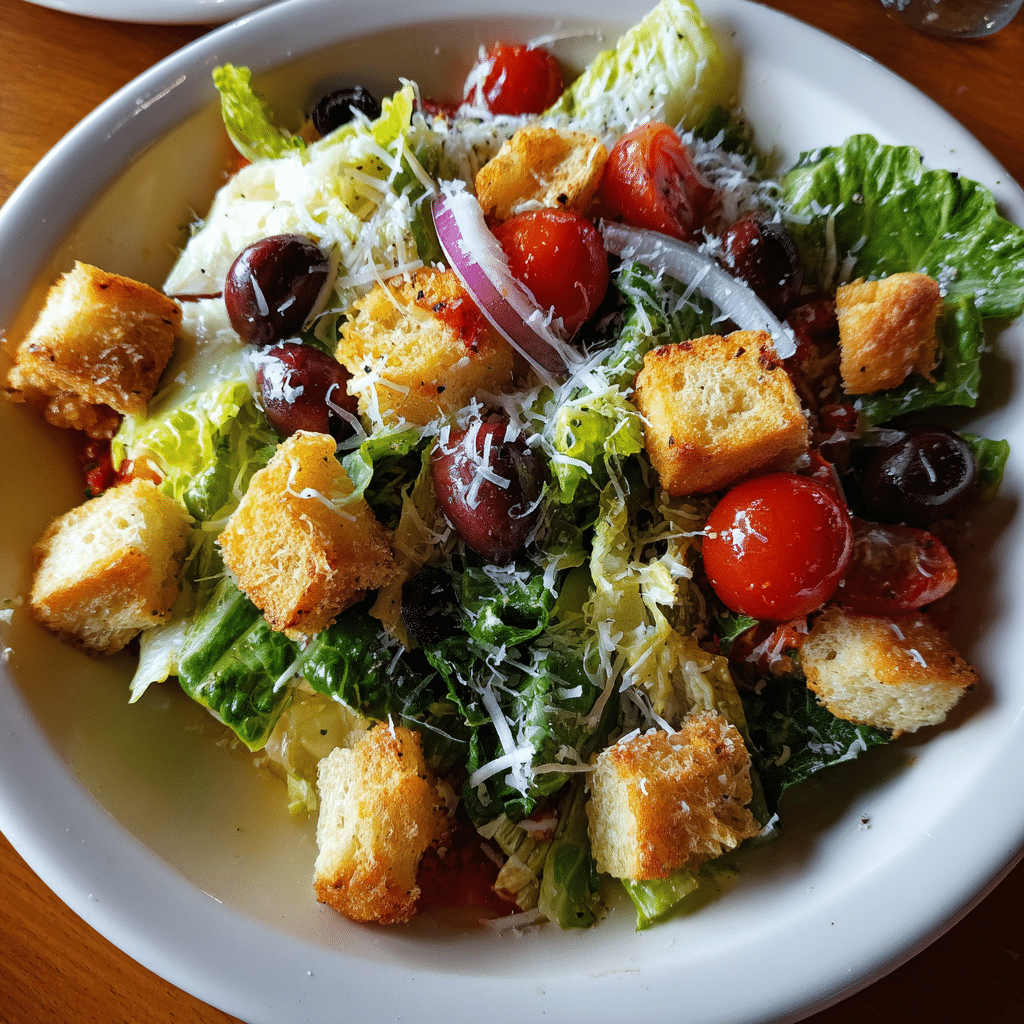
Step-by-Step Cooking Instructions for Your Olive Garden Salad Recipe
Creating the perfect Olive Garden salad recipe requires more than just tossing ingredients together. The order and technique matter significantly for achieving that restaurant-quality result.
Pre-Assembly Preparation for Your Olive Garden Salad Recipe
Before you start combining ingredients, ensure everything is properly prepped and at the right temperature. This Olive Garden salad recipe works best when vegetables are cold and crisp, while the dressing is at room temperature for easy tossing.
Remove your prepared dressing from the refrigerator about 15 minutes before serving. Cold dressing doesn’t coat lettuce evenly and tends to clump rather than distribute throughout the salad. Give it a good whisk before using, as ingredients may have separated during storage.
Check your lettuce one final time—it should be completely dry. Even a small amount of water will prevent the dressing from adhering properly. If you notice any moisture, give it another spin in your salad spinner or pat it gently with clean kitchen towels.
Have your serving bowl ready and chilled if possible. I often pop mine in the freezer for 10 minutes before assembling the salad. This keeps everything crisp longer, especially important if you’re serving at a gathering where the salad might sit out for a bit.
Gather all your prepared ingredients torn lettuce, sliced vegetables, drained and dried olives and pepperoncini, cooled croutons, and grated cheese. Having everything within reach makes assembly quick and ensures you don’t forget any components.
Assembly Method for Your Olive Garden Salad Recipe
The key to an excellent Olive Garden salad recipe is gentle tossing that coats every leaf without bruising the delicate greens or turning your vegetables mushy.
Add your mixed lettuce to the large serving bowl first, creating a fluffy base. Don’t pack it down—you want air between the leaves so dressing can reach everything.
Scatter the red cabbage evenly over the lettuce rather than dumping it in one spot. This ensures every serving gets a bit of that colorful crunch.
Distribute the tomato wedges around the bowl, placing them strategically so each portion will include some. The same goes for the onion slices and olive rings spread them throughout rather than clustering them.
Add the pepperoncini rings, which tend to settle toward the bottom, so I actually recommend adding them in two stages: half now, and half after the first gentle toss.
Here’s where technique matters: pour about two-thirds of your dressing over the salad. You can always add more, but you can’t remove excess. Using clean hands or large salad servers, gently lift the greens from the bottom and fold them over the top, rotating the bowl as you go. This folding motion coats everything evenly without bruising.
After your initial toss, taste a leaf. The dressing should provide flavor without making the lettuce dripping wet. Add more dressing if needed, always in small amounts.
Final Touches for Your Olive Garden Salad Recipe
Once your salad is dressed, add the croutons and toss one final time. Croutons go in last because they start absorbing moisture immediately adding them too early results in soggy bread cubes instead of crispy bites.
Sprinkle the grated Parmesan cheese over the top. I like to leave some visible on the surface for presentation while incorporating the rest through one last gentle toss.
Add those remaining pepperoncini rings on top for visual appeal and so people can see what’s in the salad.
For the most authentic presentation, I portion the salad onto chilled plates rather than letting people serve themselves from the bowl. This ensures everyone gets a balanced mix of all the components and the salad looks restaurant-quality on the table.
Timing Considerations for Your Olive Garden Salad Recipe
This Olive Garden salad recipe is best served immediately after assembly, but life doesn’t always cooperate with perfect timing. If you need to prep ahead, keep all components separate until the last possible moment.
Store prepped lettuce in the refrigerator wrapped in paper towels inside a sealed container—this keeps it crisp for up to 24 hours. Keep all other vegetables in separate containers. Store the dressing separately, and only assemble right before serving.
If you absolutely must dress the salad in advance, do so no more than 30 minutes before serving, skip the tomatoes (add them at the last minute), and keep the salad refrigerated. Add croutons only when you’re ready to put it on the table.
The dressing stays fresh in the refrigerator for up to five days, and the croutons keep in an airtight container at room temperature for three days, making partial advance prep quite feasible for this Olive Garden salad recipe.
Pro Tips for Perfect Olive Garden Salad Recipe Results
After making this Olive Garden salad recipe hundreds of times, I’ve learned the small details that separate a good salad from a great one. These professional techniques ensure consistent, restaurant-quality results every time.
Maintaining Crisp, Fresh Greens in Your Olive Garden Salad Recipe
Nothing ruins a salad faster than wilted, soggy lettuce. The science behind crisp greens involves managing moisture and temperature correctly.
Temperature control is critical. Lettuce stays crispest when stored at 32-36°F, just above freezing. Keep your prepared greens in the back of your refrigerator where temperatures are most consistent, not in the door where temperature fluctuates with opening and closing.
The paper towel method works wonders for maintaining crispness. After washing and spinning your lettuce completely dry, layer it in a container with paper towels between each layer. The towels absorb any residual moisture while allowing the lettuce to breathe. Replace damp towels daily if you’re storing greens for more than 24 hours.
Revive wilted lettuce by submerging it in ice water for 15 minutes before using. The cold water causes the cells to plump up again, restoring crispness. Just make absolutely certain to dry it thoroughly afterward.
Avoid the dressing puddle problem by remembering this rule: dress lightly and add more if needed. A common mistake is overdressing, which weighs down lettuce and creates that unappetizing pool of liquid at the bottom of the bowl. For this Olive Garden salad recipe, you should see a light, even coating on leaves, not dripping dressing.
Essential Tools for Your Olive Garden Salad Recipe
Having the right equipment makes preparation faster and results more consistent.
A quality salad spinner is non-negotiable. I’ve tried the paper towel method, shaking lettuce in clean kitchen towels, and every other alternative nothing removes water as effectively as a good spinner. Look for one with a smooth spinning mechanism and a bowl large enough to handle a full head of lettuce at once.
A mandoline slicer creates those paper-thin onion slices that make such a difference in texture. Hand-slicing rarely achieves the same uniformity, and thicker pieces create harsh bites that overpower other flavors. Always use the safety guard mandolines are incredibly sharp and emergency room visits are not worth the time saved.
A large mixing bowl (at least 5-quart capacity) gives you room to toss the salad properly. Trying to mix in a too-small bowl results in ingredients spilling out and uneven dressing distribution. I prefer wide, shallow bowls for salad mixing over deep, narrow ones because they make the folding motion easier.
A good whisk or immersion blender emulsifies your dressing properly. The dressing for this Olive Garden salad recipe contains oil, vinegar, and mayonnaise—ingredients that want to separate. Vigorous whisking or a quick buzz with an immersion blender creates a stable emulsion that coats lettuce evenly and doesn’t separate in the bowl.
Storage and Make-Ahead Strategies for Your Olive Garden Salad Recipe
Smart planning lets you enjoy this Olive Garden salad recipe even on your busiest days without sacrificing quality.
Dressing storage: This dressing keeps beautifully for up to five days in an airtight container in the refrigerator. Make a double or triple batch to have on hand for multiple meals. Always whisk or shake vigorously before using, as ingredients will separate during storage. This is completely normal and doesn’t affect quality.
Component prep: You can wash, dry, and tear lettuce up to 24 hours in advance using the paper towel storage method described earlier. Slice onions and soak them in ice water up to 4 hours ahead, then drain, pat dry, and refrigerate. Prepare croutons up to 3 days in advance and store in an airtight container at room temperature—refrigeration actually makes them less crispy.
Serving for a crowd: When making this Olive Garden salad recipe for gatherings, I set up a “salad bar” style presentation. Keep the lettuce mixture in one bowl, croutons in another, cheese in a third, and dressing in a pitcher or serving bowl. This prevents the salad from getting soggy if it sits out, and lets guests customize their portions. This approach also works beautifully for healthy meal prep ideas throughout the week.
Leftover management: If you have dressed salad left over (though this rarely happens!), it won’t keep well. The lettuce will wilt and become unappetizing within a few hours. However, you can salvage the situation by removing any remaining crisp vegetables and croutons, then using the wilted dressed greens in a frittata or soup the next day where texture doesn’t matter as much.
Portioning for meal prep: For lunch prep, pack lettuce, vegetables, and croutons in one container with the dressing in a separate small container. Combine only when ready to eat. This keeps everything fresh for 3-4 days and makes a perfect companion to other meal prep favorites.
Want more inspiration for your weekly menu planning? Check out my Pinterest boards where I share hundreds of make-ahead recipes, meal prep strategies, and creative serving ideas that will transform your kitchen routine and bring excitement to everyday meals.
Flavor Variations for Your Olive Garden Salad Recipe
While the classic version of this Olive Garden salad recipe is hard to beat, these variations keep things interesting and accommodate different tastes and dietary needs.
Mediterranean Twist on Your Olive Garden Salad Recipe
Transform your Olive Garden salad recipe into a Mediterranean feast by swapping pepperoncini for Kalamata olives, adding cucumber chunks, and including crumbled f
PrintOlive Garden Salad Secrets: How to Make It at Home Perfect
This Olive Garden Salad Recipe tastes just like the classic restaurant version fresh, crisp, tangy, and tossed in the iconic creamy Italian dressing. Perfect as a side dish for pasta, chicken, or a light meal.
- Prep Time: 15 mins
- Cook Time: 0 mins
- Total Time: 15 mins
- Yield: 4 servings 1x
- Category: Salad, Side Dish
- Method: No Cook
- Cuisine: Italian-American
- Diet: Vegetarian
Ingredients
- 1 large head romaine lettuce, chopped
- 1/2 cup red onion, thinly sliced
- 1/2 cup tomatoes, chopped or grape tomatoes halved
- 1/2 cup black olives
- 1/2 cup pepperoncini peppers
- 1/2 cup croutons
- 1/4 cup grated Parmesan cheese
- FOR THE DRESSING:
- 1/2 cup mayonnaise
- 1/4 cup olive oil
- 1/4 cup white vinegar
- 2 tbsp lemon juice
- 1 tbsp water
- 1 tsp sugar
- 1/2 tsp Italian seasoning
- 1/2 tsp garlic powder
- 1/2 tsp onion powder
- 1/4 tsp salt
- 1/4 tsp black pepper
- 2 tbsp grated Parmesan cheese
Instructions
- 1. Add the chopped romaine lettuce to a large serving bowl.
- 2. Top with red onion, tomatoes, olives, pepperoncinis, croutons, and Parmesan.
- 3. In a separate bowl, whisk together all dressing ingredients until smooth.
- 4. Pour desired amount of dressing over the salad.
- 5. Toss gently to combine.
- 6. Serve immediately.
Notes
- Chill the dressing for 20 minutes for the best flavor.
- Add grilled chicken to make it a full meal.
- Use store-bought Olive Garden dressing for a shortcut.
- Add more pepperoncini brine for extra tang.
Nutrition
- Serving Size: 1 bowl
- Calories: 210
- Sugar: 5g
- Sodium: 480mg
- Fat: 15g
- Saturated Fat: 3g
- Unsaturated Fat: 10g
- Trans Fat: 0g
- Carbohydrates: 14g
- Fiber: 2g
- Protein: 4g
- Cholesterol: 10mg
Keywords: olive garden salad, italian salad, restaurant copycat, easy salad recipe