
Why Make This Recipe
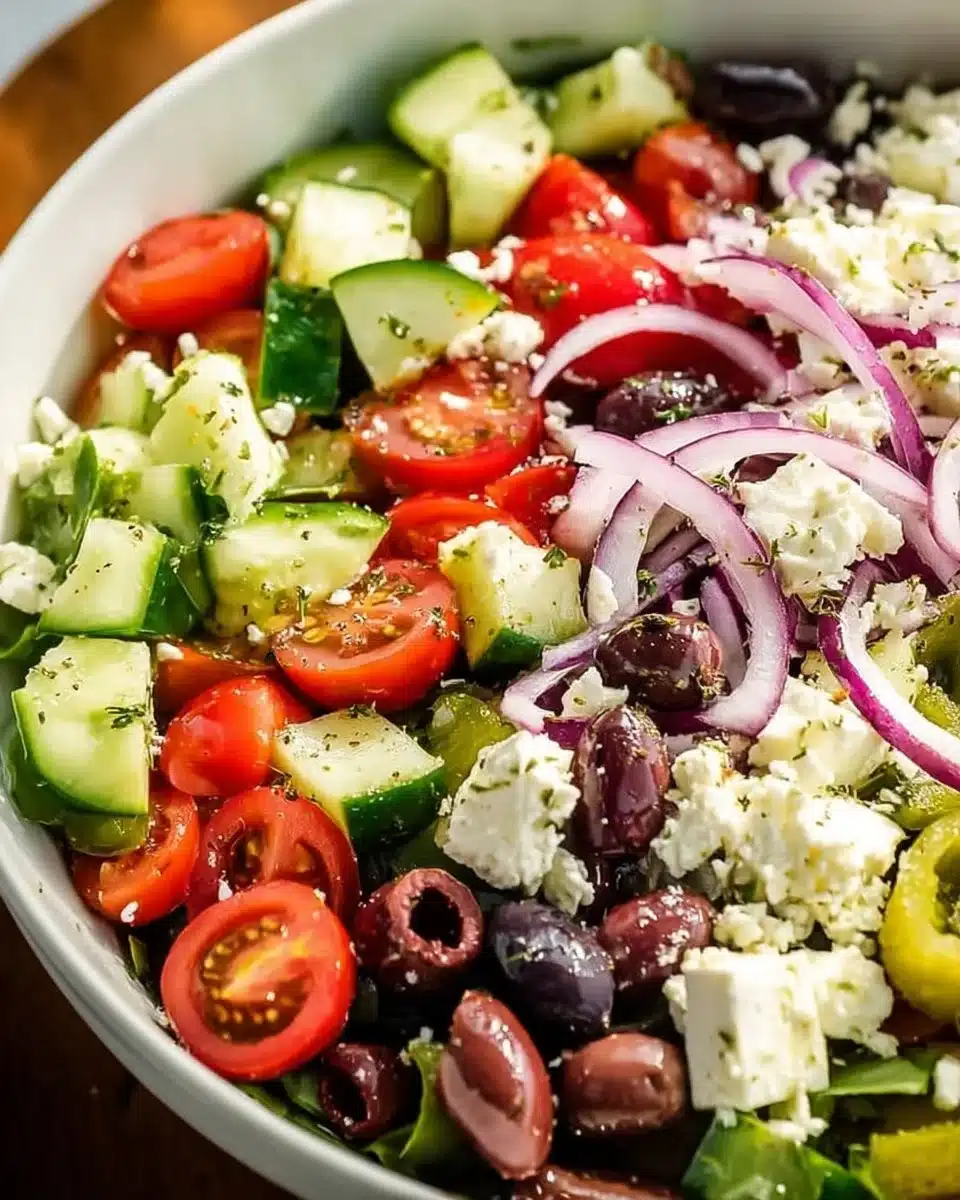
Greek Salad is a fantastic dish that brings together the vibrant and fresh flavors of Mediterranean cuisine. It’s simple to make, healthy, and bursting with color and texture. The combination of crisp cucumbers, juicy tomatoes, and creamy feta cheese is not only delicious but also visually appealing. Whether you are looking for a quick lunch, a side dish for dinner, or a dish to bring to a party, Greek Salad fits the bill perfectly. It’s a dish that serves well for any occasion and is loved by many.
Moreover, this salad is nutritious. It’s packed with vitamins and minerals, thanks to the fresh produce. The healthy fats from the olives and olive oil also contribute to a balanced meal. Plus, making it at home allows you to control the ingredients and adjust the flavors to your personal preference.
How to Make Greek Salad
Making Greek Salad is straightforward and doesn’t require any advanced cooking skills. Here’s how to do it step by step.
Ingredients:
- Lettuce (optional)
- Cucumber
- Tomatoes
- Red onion
- Kalamata olives
- Feta cheese
- Olive oil
- Red wine vinegar
- Dried oregano
- Salt
- Pepper
![image_2]
Directions:
Prepare the Vegetables: Start by washing all your vegetables under cool running water. If you’re using lettuce, chop it into bite-sized pieces and place it in a large mixing bowl. Next, take your cucumber, peel it if you prefer (some like to keep the skin for extra crunch), and dice it into small pieces.
Dice the Tomatoes: Cut your tomatoes into wedges or cubes, whatever you prefer. Make sure they’re ripe for the best flavor. Add them to the bowl.
Slice the Red Onion: Take your red onion and slice it thinly. If you’re concerned about the strong flavor, soak the slices in cold water for about 10 minutes. This helps to mellow the flavor. Drain and add to the salad.
Toss in the Olives: Take your Kalamata olives and either leave them whole or slice them in half, depending on your preference. Toss them into the bowl with the other vegetables.
Add the Feta Cheese: Crumble the feta cheese over the top of your salad. This adds a creamy texture and salty flavor that pairs perfectly with the fresh vegetables.
Make the Dressing: In a smaller bowl, combine the olive oil, red wine vinegar, dried oregano, salt, and pepper. Whisk it together until it is mixed thoroughly.
Dress the Salad: Drizzle the dressing over the salad ingredients in the large bowl. Gently toss everything together to coat all the ingredients with the dressing. Be careful not to crush the feta cheese.
Serve Immediately: Greek Salad is best served fresh. You can enjoy it right away, soaking in the delicious flavors.
How to Serve Greek Salad
Greek Salad is versatile and can be served in many ways. It can be enjoyed on its own as a light meal, especially if you add some grilled chicken or chickpeas for protein. It makes a great side dish for grilled meats, seafood, or even sandwiches. You can also serve it as part of a mezze platter with dips like tzatziki or hummus, pita bread, and other appetizers.
For a visually appealing presentation, serve the salad in a wooden bowl or a vibrant colored dish. Drizzle a little extra dressing or a sprinkle of feta on top just before serving for that restaurant-style finish.
How to Store Greek Salad
If you happen to have leftovers, it’s best to store the Greek Salad without the dressing. Fresh vegetables can get soggy when stored with dressing, so keep them separate. You can put the salad components in airtight containers in the refrigerator for up to 2 days.
When you’re ready to eat again, take out the salad ingredients, make a fresh batch of dressing, and toss everything together. This ensures you’ll have a crunchy, fresh salad just like when you first made it.
Tips to Make Greek Salad
Be Creative with Vegetables: Feel free to add other vegetables like bell peppers or radishes for extra crunch and flavor. You can also toss in some fresh herbs like parsley or dill for added freshness.
Choose Good Quality Ingredients: Since the salad is simple and relies on fresh ingredients, opt for the ripest vegetables and high-quality feta cheese. Authentic Greek feta cheese made from sheep or goat’s milk will elevate the dish significantly.
Make Ahead: You can prepare the vegetables ahead of time and keep them in the refrigerator. Just add the feta and dressing right before you’re about to serve to maintain freshness.
Adjusting the Dressing: If you prefer a tangier taste, add more vinegar or some lemon juice to the dressing. Adjust salt and pepper according to your taste.
Variation
While the classic Greek Salad recipe is delicious as it is, you can easily make variations to suit your taste. Here are a few ideas:
- Mediterranean Twist: Add artichokes or sun-dried tomatoes for a Mediterranean flair.
- Protein-Packed: Include grilled chicken or shrimp to turn the salad into a heartier main dish.
- Grain Bowl: Serve the salad over cooked quinoa or farro for extra texture and nutrition.
- Avocado: Add diced avocado for a creamy and healthy fat-to-the mix.
Each variation keeps the fresh essence of a Greek Salad while introducing new flavors!
FAQs
1. Can I make Greek Salad without feta cheese?
Yes, you can! If you’re looking for a dairy-free option, simply omit the feta or substitute it with a non-dairy cheese alternative.
2. Is Greek salad gluten-free?
Yes, Greek Salad is naturally gluten-free as it contains no grains or gluten-containing ingredients.
3. Can I use different types of olives?
Absolutely! While Kalamata olives are traditional, you can use any other olives you prefer such as green olives or black olives.
4. How do I choose ripe tomatoes?
Look for tomatoes that are firm yet slightly soft to the touch when gently squeezed. They should smell fragrant and have a rich color.
5. Can I use balsamic vinegar instead of red wine vinegar?
Yes, you can! Balsamic vinegar will add a different flavor profile, making your salad sweeter and richer.
In conclusion, Greek Salad is not just a meal; it’s a reflection of the Mediterranean lifestyle – simple, delicious, and healthy. Whether you make it for yourself, your family, or friends, it’s hard to go wrong with this classic recipe. Enjoy the burst of fresh flavors and the satisfaction of making a delightful salad at home!
PrintGreek Salad

A vibrant and fresh Greek Salad, combining crisp cucumbers, juicy tomatoes, and creamy feta cheese, perfect for any occasion.
- Prep Time: 15 minutes
- Cook Time: 0 minutes
- Total Time: 15 minutes
- Yield: 4 servings
- Category: Salad
- Method: No Cooking
- Cuisine: Mediterranean
- Diet: Vegetarian
Ingredients
- Lettuce (optional)
- Cucumber
- Tomatoes
- Red onion
- Kalamata olives
- Feta cheese
- Olive oil
- Red wine vinegar
- Dried oregano
- Salt
- Pepper
Instructions
- Prepare the vegetables: Wash all vegetables and chop lettuce if using, then place in a large bowl.
- Dice the tomatoes and add to the bowl.
- Slice the red onion thinly and add to the salad.
- Toss in the Kalamata olives.
- Add the crumbled feta cheese over the top.
- Make the dressing by whisking olive oil, red wine vinegar, oregano, salt, and pepper together.
- Dress the salad with the dressing and gently toss everything together.
- Serve immediately for best flavor.
Notes
To maintain freshness, store vegetables separate from dressing if there are leftovers.
Nutrition
- Serving Size: 1 serving
- Calories: 250
- Sugar: 4g
- Sodium: 500mg
- Fat: 18g
- Saturated Fat: 6g
- Unsaturated Fat: 10g
- Trans Fat: 0g
- Carbohydrates: 12g
- Fiber: 3g
- Protein: 7g
- Cholesterol: 20mg
Keywords: Greek Salad, Mediterranean, Healthy Salad, Fresh Ingredients, Quick Meal