
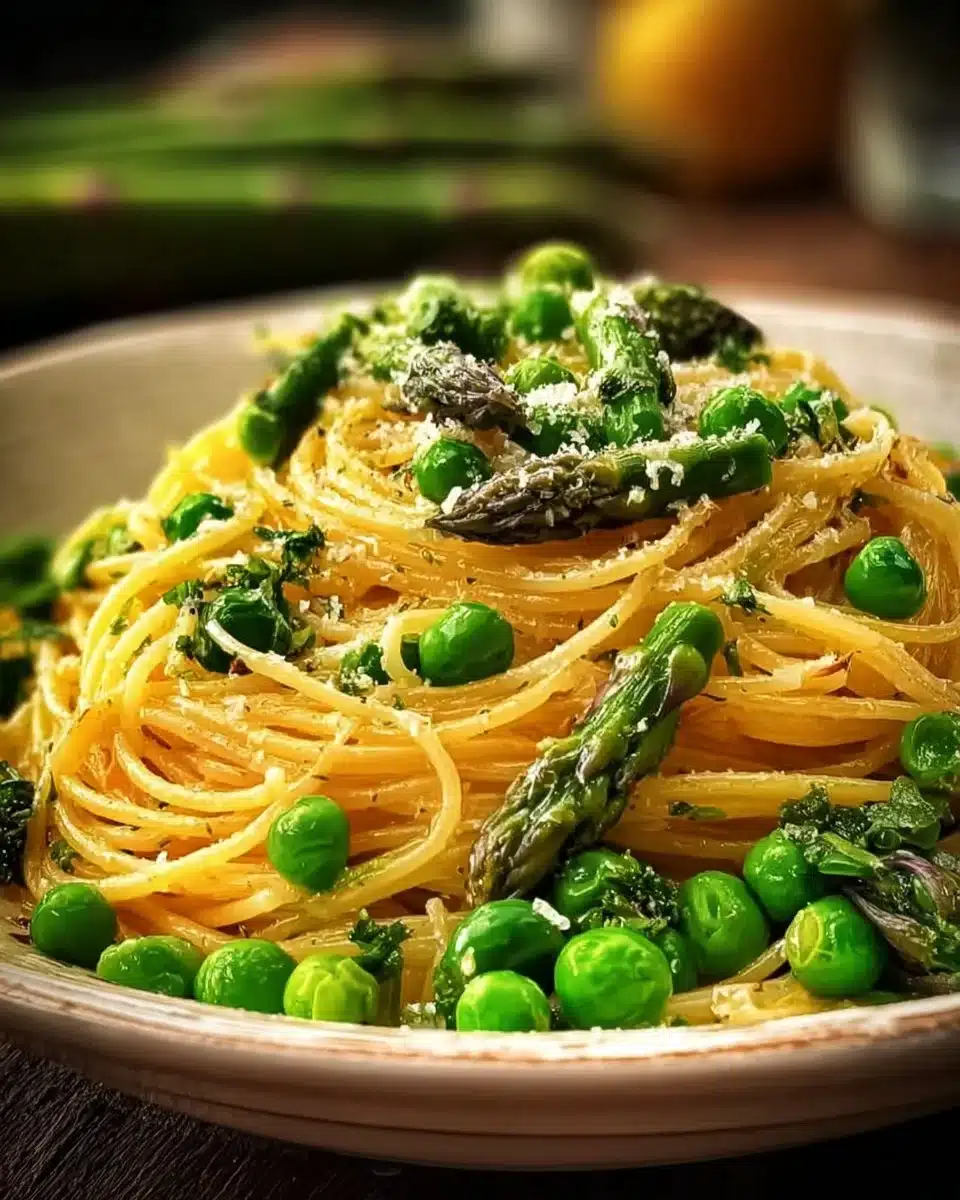
why make this recipe
Fresh Lemon Garlic Spring Pasta is a delightful dish that celebrates the vibrant flavors of spring. This recipe is not only easy to make but also packed with healthy ingredients. The combination of tender asparagus, sweet peas, and fragrant garlic creates a refreshing meal that’s perfect for any time of year. With bright lemon zest and juice adding a zesty kick, this pasta dish is both comforting and refreshing.
Additionally, this recipe is flexible and can easily be adjusted to fit your dietary preferences. Whether you are looking to impress guests at a dinner party or just want a simple weeknight meal, Fresh Lemon Garlic Spring Pasta is sure to please. It can be made in under 30 minutes, making it a quick choice for busy days.
how to make Fresh Lemon Garlic Spring Pasta
Making Fresh Lemon Garlic Spring Pasta is straightforward and requires minimal ingredients. Follow these steps for a delicious meal that highlights the fresh flavors of spring.
Ingredients
- 12 ounces spaghetti or linguine
- 1 bunch (about 1 pound) asparagus, trimmed and cut into 2-inch pieces
- 1 cup frozen or fresh peas, shelled
- 4 cloves garlic, minced
- 1 large lemon (zest and juice)
- 3 tablespoons extra virgin olive oil
- ½ cup freshly grated Parmesan cheese (optional)
- Pinch of red pepper flakes (optional)
- Salt to taste
- Black pepper to taste
- Handful of chopped fresh parsley or basil for garnish
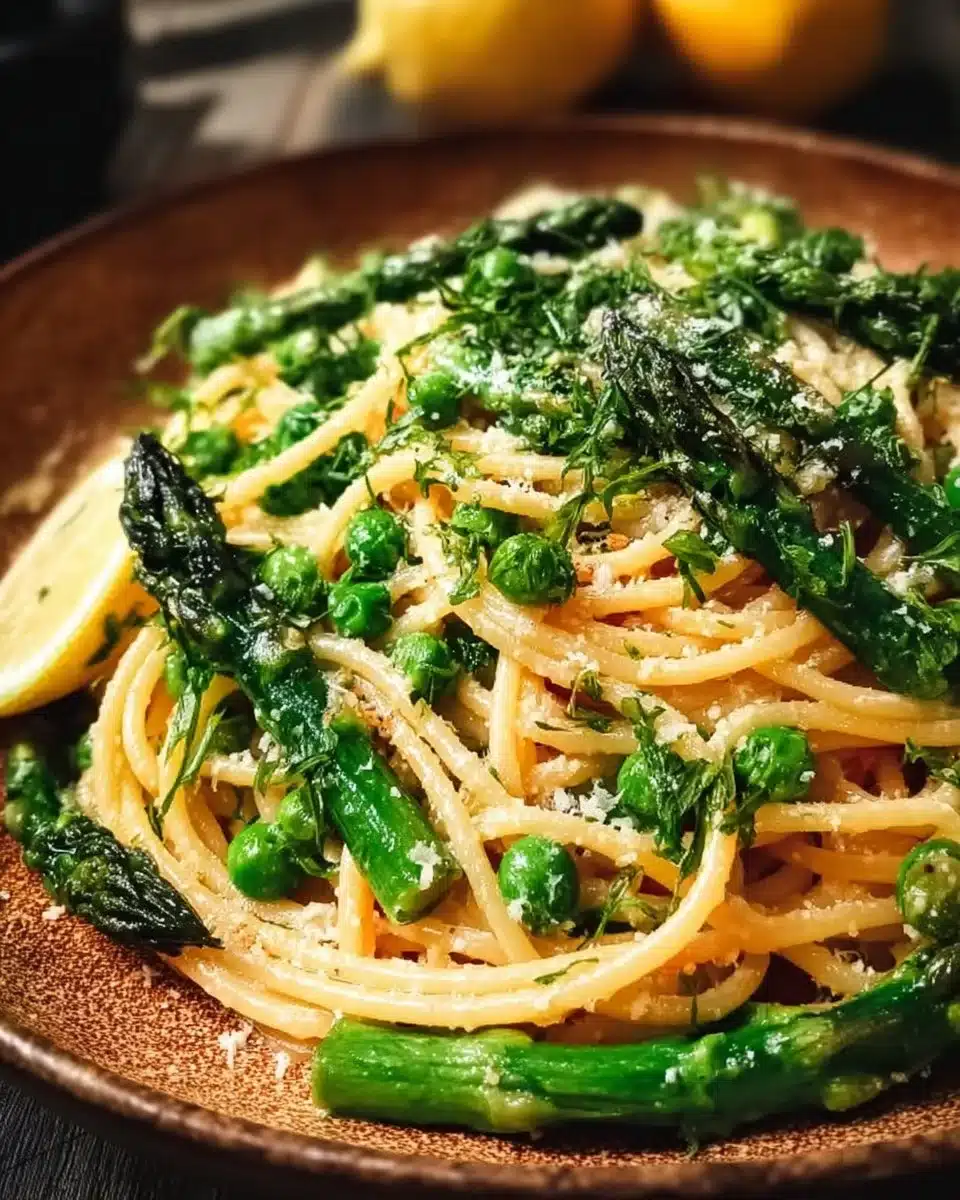
Directions
- Prepare the pasta: Start by bringing a large pot of salted water to a boil. Use about 1 tablespoon of salt for every 4 quarts of water. Once boiling, add the spaghetti or linguine and cook according to the package instructions until al dente, which usually takes about 8 to 10 minutes.
- Prep the vegetables: While the pasta is cooking, prepare the asparagus and peas. Trim the asparagus, cutting it into 2-inch pieces. If you are using frozen peas, you can have them ready to add to the cooking water without thawing.
- Blanch the asparagus and peas: About 3 minutes before the pasta is done cooking, add the prepared asparagus and peas to the pot. This quick blanching helps soften the vegetables while keeping them vibrant and fresh. Use a slotted spoon or a sieve to remove the asparagus and peas from the pot, and set them aside on a plate.
- Drain the pasta: Once the pasta reaches al dente, drain it in a colander, but be sure to reserve ½ cup of the cooking water. This starchy water will help you create a silky sauce later on.
- Sauté the garlic: In a large skillet, heat the extra virgin olive oil over medium heat. Once the oil is warm, add the minced garlic and the optional red pepper flakes. Sauté for 1 to 2 minutes until the garlic is fragrant but not browned. Keep an eye on it to prevent burning.
- Combine the vegetables: Add the blanched asparagus and peas to the skillet with the garlic. Toss everything gently for about 2 to 3 minutes. This step warms the vegetables through and allows the flavors to blend nicely.
- Add the pasta: Now, add the drained pasta to the skillet. Toss everything together, carefully mixing in the reserved pasta water a little at a time. This will help loosen the mixture and create a light sauce that clings to the pasta.
- Add lemon and cheese: Remove the skillet from heat. Stir in the lemon zest, lemon juice, and the optional grated Parmesan cheese. Toss everything together to ensure that the flavors are well combined.
- Season to taste: Finally, season the pasta with salt and freshly ground black pepper to your preference. Toss once more to ensure even seasoning throughout the dish.
- Garnish and serve: Before serving, garnish with a handful of chopped fresh herbs, such as parsley or basil, to add a pop of color and freshness. Serve the pasta immediately and enjoy!
how to serve Fresh Lemon Garlic Spring Pasta
Fresh Lemon Garlic Spring Pasta is a versatile dish that works well as a main course or a side. If serving it as a main dish, consider pairing it with a light salad or some crusty bread to round out the meal. For a heartier option, you can easily add grilled protein, such as chicken or shrimp, to the dish for added nutrition and flavor.
This pasta can be plated individually with a sprinkle of cheese and fresh herbs on top. Alternatively, you can serve it family-style in a large serving bowl, allowing everyone to help themselves. Either way, the pasta is best enjoyed fresh when it is at its most flavorful.
how to store Fresh Lemon Garlic Spring Pasta
If you have leftovers, storing Fresh Lemon Garlic Spring Pasta is simple. Allow the dish to cool to room temperature before transferring it to an airtight container. It can be stored in the refrigerator for up to 3 days.
When you are ready to enjoy the leftovers, simply reheat in a skillet over low heat. You may need to add a splash of water or a drizzle of olive oil to bring the dish back to life. Stir occasionally until warmed through, and then serve again with fresh herbs for garnish.
tips to make Fresh Lemon Garlic Spring Pasta
- Choose high-quality pasta: Opt for whole grain or gluten-free pasta if you have dietary preferences. A high-quality pasta will have good texture and flavor.
- Freshness is key: Use fresh vegetables for the best flavor and texture. Whenever possible, choose fresh asparagus and peas instead of frozen options.
- Don’t overcook the pasta and vegetables: Ensure you cook the pasta and vegetables just until tender. Overcooked pasta and mushy vegetables will change the dish’s texture.
- Customize the dish: Feel free to add different vegetables based on your seasonal preferences. Cherry tomatoes, zucchini, or spinach also work well in this dish.
- Make it vegan: To create a vegan version, simply omit the Parmesan cheese or replace it with a dairy-free alternative.
- Top with protein: Add grilled chicken, shrimp, or chickpeas to make this dish more filling.
variation (if any)
While the recipe is delightful as-is, there are several variations you can explore:
- Choose other pastas: Instead of spaghetti or linguine, try penne or fettuccine for a different shape and texture.
- Add nuts: Toasted pine nuts or sliced almonds can add a crunchy texture and additional flavor.
- Incorporate more greens: You can incorporate spinach, kale, or arugula for added nutrients and flavor.
- Spice it up: If you enjoy heat, consider adding sliced jalapeños or a spicier variety of red pepper flakes to the dish.
- Creamy option: Alternate the recipe by adding a splash of heavy cream to the garlic sauté before mixing with the pasta for a creamier sauce.
FAQs
1. Can I use a different type of pasta?
Yes, you can substitute any pasta you prefer! Whole grain, gluten-free, or other shapes all work well.
2. Can I prepare this dish in advance?
While it tastes best fresh, you can prepare and store the components separately. Keep the vegetables and pasta separate in airtight containers in the fridge, then combine and reheat them when ready to serve.
3. How do I know when my pasta is al dente?
Al dente pasta should be tender but still firm when bitten. If it feels soft and mushy, it has overcooked. Taste a piece a minute or two before the package says it’s done.
4. Can I substitute lemon with another citrus fruit?
Yes, lime or orange can be used for a different flavor profile. Just make sure to adjust to your taste preference.
5. Is this recipe suitable for meal prep?
It is ideal for meal prep! Store components separately to maintain freshness and simply reheat when needed.
Enjoy making your Fresh Lemon Garlic Spring Pasta, and savor the delicious flavors of spring right on your plate!
PrintFresh Lemon Garlic Spring Pasta
A delightful pasta dish that celebrates spring with asparagus, peas, and zesty lemon, perfect for any occasion.
- Prep Time: 10 minutes
- Cook Time: 15 minutes
- Total Time: 25 minutes
- Yield: 4 servings 1x
- Category: Main Course
- Method: Baking
- Cuisine: Italian
- Diet: Vegetarian
Ingredients
- 12 ounces spaghetti or linguine
- 1 bunch (about 1 pound) asparagus, trimmed and cut into 2-inch pieces
- 1 cup frozen or fresh peas, shelled
- 4 cloves garlic, minced
- 1 large lemon (zest and juice)
- 3 tablespoons extra virgin olive oil
- ½ cup freshly grated Parmesan cheese (optional)
- Pinch of red pepper flakes (optional)
- Salt to taste
- Black pepper to taste
- Handful of chopped fresh parsley or basil for garnish
Instructions
- Prepare the pasta: Start by bringing a large pot of salted water to a boil. Use about 1 tablespoon of salt for every 4 quarts of water. Once boiling, add the spaghetti or linguine and cook according to the package instructions until al dente, about 8 to 10 minutes.
- Prep the vegetables: While the pasta is cooking, prepare the asparagus and peas. Trim the asparagus into 2-inch pieces. If using frozen peas, prepare them to add to the cooking water without thawing.
- Blanch the asparagus and peas: About 3 minutes before the pasta is done, add the prepared asparagus and peas to the pot. Use a slotted spoon to remove the vegetables and set aside.
- Drain the pasta: Once the pasta reaches al dente, drain it in a colander, reserving ½ cup of the cooking water.
- Sauté the garlic: In a large skillet, heat the olive oil over medium heat. Add the minced garlic and optional red pepper flakes. Sauté for 1 to 2 minutes until fragrant but not browned.
- Combine the vegetables: Add the blanched asparagus and peas to the skillet with the garlic. Toss gently for 2 to 3 minutes.
- Add the pasta: Add the drained pasta to the skillet, mixing in the reserved pasta water gradually to create a light sauce.
- Add lemon and cheese: Remove from heat and stir in lemon zest, lemon juice, and optional Parmesan cheese.
- Season to taste: Season the pasta with salt and black pepper to preference, tossing once more.
- Garnish and serve: Garnish with fresh herbs and serve immediately.
Notes
This dish pairs well with a light salad or crusty bread. It can also be customized with proteins like chicken or shrimp.
Nutrition
- Serving Size: 1 serving
- Calories: 350
- Sugar: 5g
- Sodium: 400mg
- Fat: 12g
- Saturated Fat: 4g
- Unsaturated Fat: 6g
- Trans Fat: 0g
- Carbohydrates: 45g
- Fiber: 3g
- Protein: 15g
- Cholesterol: 30mg
Keywords: pasta, spring, lemon, asparagus, vegetarian