
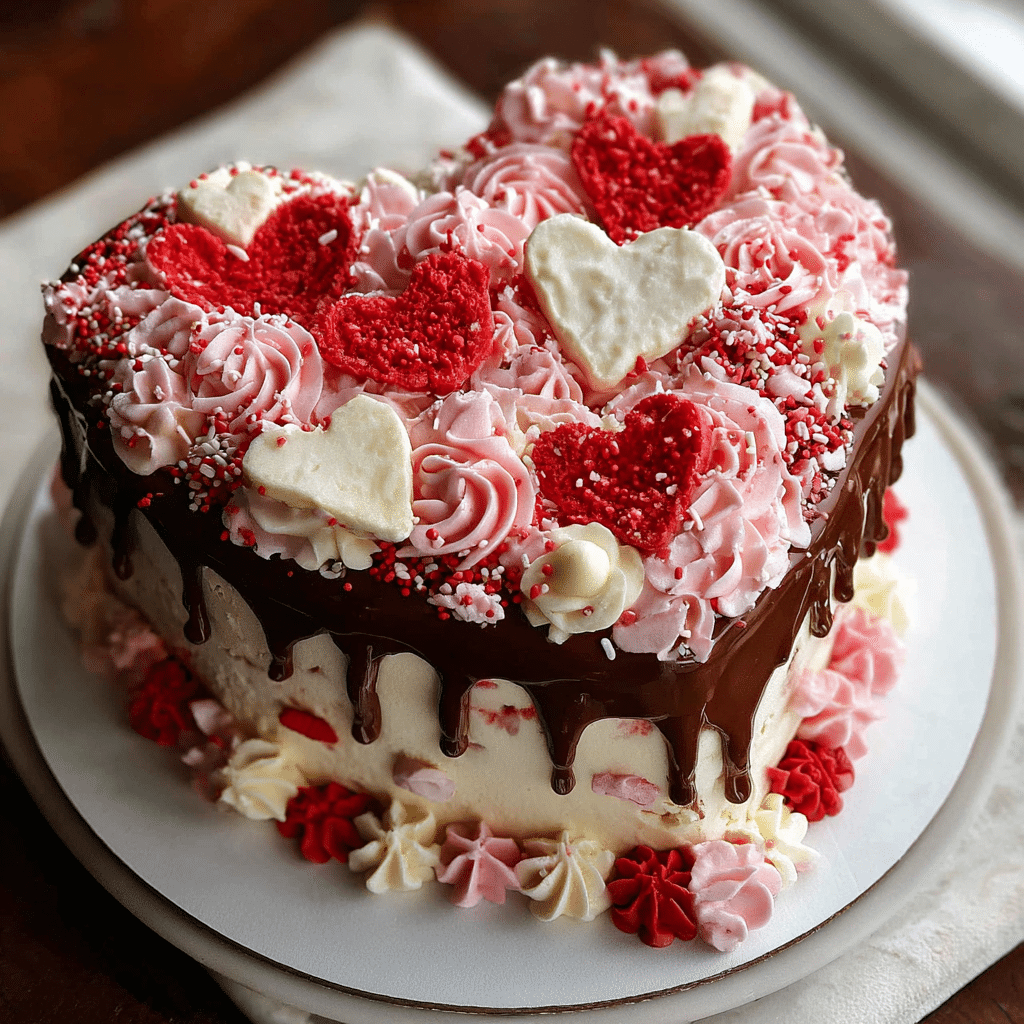
Struggling to find the perfect way to say “I love you” this Valentine’s Day? A homemade cake speaks louder than any store-bought dessert ever could. There’s something magical about presenting someone you love with a cake you’ve crafted with your own hands layers of moist sponge, silky frosting, and decorations that show you care.
These Valentine’s Day cakes deliver exactly what you need: show-stopping designs that taste as incredible as they look. Hi, I’m Sam from dishfoody.com, and over the years of creating recipes that bring people together, I’ve discovered that Valentine’s Day cakes are the ultimate expression of love in the kitchen. They’re romantic, personal, and surprisingly achievable even if you’re not a professional baker.
In this guide, you’ll discover 15 sweet cake recipes perfect for Valentine’s Day, along with decorating tips, flavor combinations, ingredient prep essentials, and answers to your most common baking questions. Whether you’re planning an intimate dinner for two or a celebration with loved ones, these cakes will help you create an unforgettable moment.
Why These Valentine’s Day Cakes Work
These Valentine’s Day cake recipes focus on three things: impressive flavor, simple techniques, and romantic presentation. You don’t need fancy equipment or culinary school training to create bakery-worthy results.
- Uses everyday baking ingredients you likely already have in your pantry
- Most recipes come together in under an hour of active prep time
- Perfect for both experienced bakers and complete beginners
- Designs range from elegantly simple to elaborately romantic
- Each recipe includes make-ahead options to reduce day-of stress
- Flavors appeal to every palate, from classic vanilla to rich chocolate
- Decorating techniques are clearly explained with beginner-friendly alternatives
Choosing the Right Valentine’s Day Cake Style
Selecting the perfect Valentine’s Day cake depends on your skill level, available time, and the message you want to send. The right choice makes all the difference between a stressful baking experience and an enjoyable creative process.
Best Cake Styles for Valentine’s Day
Layer cakes create dramatic height and allow for beautiful filling combinations. A classic two or three-layer cake with buttercream frosting between each tier delivers that “wow” factor when you slice into it. Heart-shaped cakes offer obvious romantic symbolism and work beautifully for Valentine’s celebrations. Bundt cakes provide an elegant option with less decorating required—just a simple glaze can look stunning. Sheet cakes work wonderfully when you’re celebrating with a larger group and want to serve more people. Cupcakes give you portion control and the opportunity to try multiple flavor combinations in one batch.
Design Considerations for Your Valentine’s Day Cake
Think about your recipient’s taste preferences first. Do they prefer chocolate or fruit flavors? Rich and indulgent or light and fresh? Consider the setting where you’ll serve the cake. An intimate dinner for two calls for a smaller 6-inch cake, while a gathering needs something larger. Evaluate your decorating comfort level honestly. Simple designs with fresh berries and a dusting of powdered sugar can look just as beautiful as elaborate piping work. Time available matters too—some Valentine’s Day cakes require overnight chilling while others come together quickly.
Substitutions for Different Occasions
These Valentine’s Day cake recipes adapt easily to other celebrations. Replace heart-shaped pans with round ones for birthdays or anniversaries. Swap red and pink decorations for seasonal colors to transform the same base recipe for different holidays. Change the filling flavors to match the season use fresh strawberries in spring, citrus in winter, or stone fruits in summer.
Ingredients & Prep for Valentine’s Day Cakes
Proper ingredient preparation makes the difference between a good cake and an extraordinary one. Taking time to prep correctly ensures your Valentine’s Day cakes turn out perfectly every time.
Cake Prep Essentials for Valentine’s Day Baking
Bring all refrigerated ingredients to room temperature before you begin. Cold eggs and butter don’t incorporate properly and can result in dense cakes. This typically takes about one hour on your counter. Measure flour correctly by spooning it into measuring cups and leveling off with a knife rather than scooping directly from the bag, which compacts the flour and leads to dry cakes. Prepare your pans by greasing them thoroughly and lining the bottoms with parchment paper cut to fit. This ensures your Valentine’s Day cakes release cleanly without sticking. Preheat your oven for at least 15 minutes before baking to ensure even temperature throughout.
Frosting and Filling Components
Classic Buttercream Base:
- 1 cup unsalted butter, softened
- 4 cups powdered sugar
- 2-3 tablespoons heavy cream
- 2 teaspoons vanilla extract
- Pinch of salt
- Food coloring in red or pink for Valentine’s theme
Cream Cheese Frosting:
- 8 oz cream cheese, softened
- ½ cup unsalted butter, softened
- 4 cups powdered sugar
- 1 teaspoon vanilla extract
- 1 tablespoon lemon juice
Ganache Filling:
- 8 oz dark chocolate, chopped
- 1 cup heavy cream
- 2 tablespoons butter
Allow buttercream to come together for 5-7 minutes of beating for the fluffiest texture. Cream cheese frosting requires softer cream cheese for smooth consistency without lumps. Ganache needs to cool for at least 2 hours before spreading to achieve the right thickness.
Pantry Staples for Valentine’s Day Cakes
Stock your pantry with all-purpose flour, granulated sugar, and brown sugar as your foundation. Baking powder and baking soda provide lift, but check expiration dates as they lose potency over time. Pure vanilla extract delivers better flavor than imitation versions. Unsweetened cocoa powder works for chocolate variations. Vegetable oil keeps cakes moist, while butter adds rich flavor. Eggs provide structure and should be large grade A. Heavy cream serves double duty in both cake batter and frosting. Have decorating supplies ready: sprinkles in Valentine’s colors, fresh berries, edible flowers, and heart-shaped cookie cutters for garnishes.
Step-by-Step Cooking Instructions for Valentine’s Day Cakes
Follow these detailed steps to create beautiful Valentine’s Day cakes that taste as wonderful as they look. Clear instructions remove the guesswork and build your confidence.
Pre-Cooking Prep for Valentine’s Day Cakes
Position oven racks in the center of your oven for even heat distribution. Preheat to the temperature specified in your recipe, typically 350°F for most layer cakes. Prepare pans by applying a thin layer of butter or non-stick spray, then dust with flour or line with parchment paper. For heart-shaped Valentine’s Day cakes, trace the pan bottom onto parchment and cut precisely. Gather all ingredients and measure them out before you begin mixing. This “mise en place” approach prevents forgotten ingredients and ensures smooth workflow. Set up your mixer with the appropriate attachment—paddle for creaming butter and sugar, whisk for egg whites.
Cooking Method for Valentine’s Day Cakes
Mixing the Batter:
Cream butter and sugar together on medium-high speed for 3-4 minutes until light and fluffy. This incorporates air that helps your Valentine’s Day cakes rise. Add eggs one at a time, beating well after each addition. Scrape down the bowl sides frequently. In a separate bowl, whisk together all dry ingredients. In another container, combine liquid ingredients. Alternate adding dry and wet ingredients to the butter mixture, beginning and ending with dry ingredients. Mix on low speed just until combined. Overmixing develops gluten and creates tough, dense cakes.
Baking:
Divide batter evenly between prepared pans. A kitchen scale helps ensure equal layers. Tap pans gently on the counter to release air bubbles. Place in preheated oven and avoid opening the door for the first 20 minutes, as temperature fluctuations can cause cakes to sink. Bake according to recipe timing, typically 25-35 minutes for 8 or 9-inch layers.
Doneness Check for Valentine’s Day Cakes
Insert a toothpick or cake tester into the center of the cake. It should come out clean or with just a few moist crumbs attached. The cake should spring back when lightly pressed with your finger. Edges will pull slightly away from pan sides. The internal temperature should reach 210°F when measured with an instant-read thermometer. Visual cues include a golden-brown surface and a cake that smells fragrant and sweet.
Resting Valentine’s Day Cakes
Let cakes cool in pans for 10-15 minutes after removing from the oven. This allows structure to set without becoming soggy from condensation. Run a knife around edges to loosen, then invert onto cooling racks. Remove parchment paper if used. Allow cakes to cool completely before frosting, typically 1-2 hours. Frosting warm cakes causes melting and sliding. For the best results, wrap cooled cake layers in plastic wrap and refrigerate for at least 2 hours or overnight before decorating. This firms the crumb and makes frosting much easier.
Pro Tips for Perfect Valentine’s Day Cakes
Master these professional techniques to elevate your Valentine’s Day cakes from homemade to bakery-quality. Small details create impressive results.
Avoiding Dry or Dense Valentine’s Day Cakes
Don’t overbake your cakes. Check for doneness 5 minutes before the recipe’s minimum suggested time and watch carefully. Oven temperatures vary, and many home ovens run hot. Use an oven thermometer to verify accuracy. Measure ingredients precisely using proper techniques too much flour creates dryness while too little causes collapse. Don’t overmix batter once flour is added. Mix just until you no longer see dry flour streaks. Add a simple syrup brushed onto cake layers before frosting to add moisture and flavor. Make simple syrup by heating equal parts sugar and water until sugar dissolves, then cool completely. Use buttermilk, sour cream, or yogurt in your recipe as these acidic ingredients create tender, moist crumb structure.
Tool Recommendations for Valentine’s Day Cakes
Invest in an oven thermometer to ensure accurate baking temperatures. A kitchen scale provides precise measurements that volume measurements can’t match. Offset spatulas make frosting cakes significantly easier and create smooth, professional surfaces. A rotating cake stand allows you to spin the cake while holding your spatula still for even frosting application. Piping bags and tips open up decorating possibilities start with a basic round tip and a star tip. Bench scrapers create sharp, clean edges on frosted cakes. Cake strips wrapped around pans during baking prevent doming and create flat layers that stack easily. Heart-shaped pans are available in various sizes for dedicated Valentine’s Day baking, but you can also create heart shapes by combining one round cake and one square cake cut and arranged cleverly.
Storage & Reheating Valentine’s Day Cakes
Unfrosted cake layers wrapped tightly in plastic wrap last 2 days at room temperature, 1 week refrigerated, or 3 months frozen. Frosted Valentine’s Day cakes with buttercream can sit at room temperature for 2 days if your kitchen isn’t too warm. Refrigerate cakes with cream cheese frosting, fresh fruit fillings, or whipped cream components. Bring refrigerated cakes to room temperature 1 hour before serving for best flavor and texture. Freeze decorated cakes by placing them uncovered in the freezer for 30 minutes to firm frosting, then wrap carefully in plastic wrap and aluminum foil. Frozen decorated cakes last up to 3 months. Thaw in the refrigerator overnight, still wrapped, to prevent condensation from ruining decorations.
For more gorgeous Valentine’s Day inspiration and creative presentation ideas, explore our collection at dishfoody.com where you’ll find stunning treats perfect for every romantic celebration!
Flavor Variations for Valentine’s Day Cakes
Customize these Valentine’s Day cake recipes to match your loved one’s preferences. Different flavor profiles create unique experiences while using the same basic techniques.
Classic Romance Variations
Red Velvet Love: Traditional red velvet cake combines cocoa powder with distinctive tang from buttermilk and vinegar. The vibrant red color screams Valentine’s Day. Pair with classic cream cheese frosting and decorate with white chocolate shavings. Strawberry Dreams: Use fresh strawberry puree in the cake batter and between layers. Make strawberry buttercream by beating freeze-dried strawberry powder into your frosting base. Top with fresh sliced strawberries and a light glaze. Chocolate Devotion: Rich chocolate cake layers filled with chocolate ganache and frosted with dark chocolate buttercream satisfy serious chocolate lovers. Add a pinch of espresso powder to intensify chocolate flavor without making it taste like coffee.
Modern Flavor Twists for Valentine’s Day Cakes
Champagne Celebration: Replace some of the liquid in your cake recipe with champagne for subtle sophistication. Create champagne buttercream by reducing champagne to a syrup and beating into frosting. This elegant option works beautifully for adult Valentine’s celebrations. Raspberry Rose: Incorporate rose water into vanilla cake and fill with raspberry preserves. Rose flavoring is potent start with just ¼ teaspoon and adjust to taste. Decorate with fresh raspberries and edible rose petals. Salted Caramel Indulgence: Fill chocolate or vanilla layers with homemade salted caramel. Top with caramel buttercream and drizzle with additional salted caramel. A sprinkle of flaky sea salt adds sophisticated contrast.
Special Dietary Valentine’s Day Cakes
Gluten-Free Romance: Replace all-purpose flour with a quality gluten-free flour blend designed for baking. Add ¼ teaspoon xanthan gum per cup of gluten-free flour if your blend doesn’t include it. Results are nearly indistinguishable from traditional versions. Sugar-Free Sweetness: Use erythritol or monk fruit sweetener in place of sugar. Be aware that sugar-free versions may have slightly different texture and won’t brown as deeply. These work best with chocolate flavors that mask any aftertaste.
Dairy-Free Delight: Substitute coconut cream for heavy cream and vegan butter for regular butter. Use non-dairy milk like almond or oat milk in place of regular milk. Dairy-free Valentine’s Day cakes work beautifully for those with lactose intolerance.
| Flavor Profile | Base Cake | Filling | Frosting | Decoration |
|---|---|---|---|---|
| Classic Red Velvet | Red velvet with cocoa | Cream cheese | Cream cheese | White chocolate curls |
| Strawberry Romance | Vanilla or white | Fresh strawberry | Strawberry buttercream | Fresh strawberries |
| Chocolate Decadence | Dark chocolate | Ganache | Chocolate buttercream | Chocolate shavings |
| Champagne Elegance | Vanilla champagne | Raspberry preserve | Champagne buttercream | Edible gold leaf |
| Raspberry Rose | Vanilla rose | Raspberry jam | Rose buttercream | Rose petals, raspberries |
| Salted Caramel | Chocolate or vanilla | Salted caramel | Caramel buttercream | Caramel drizzle, sea salt |
| Lemon Berry | Lemon | Blueberry compote | Lemon buttercream | Fresh berries |
| Cookies & Cream | Vanilla with cookie pieces | Cookies & cream | Vanilla buttercream | Crushed cookies |
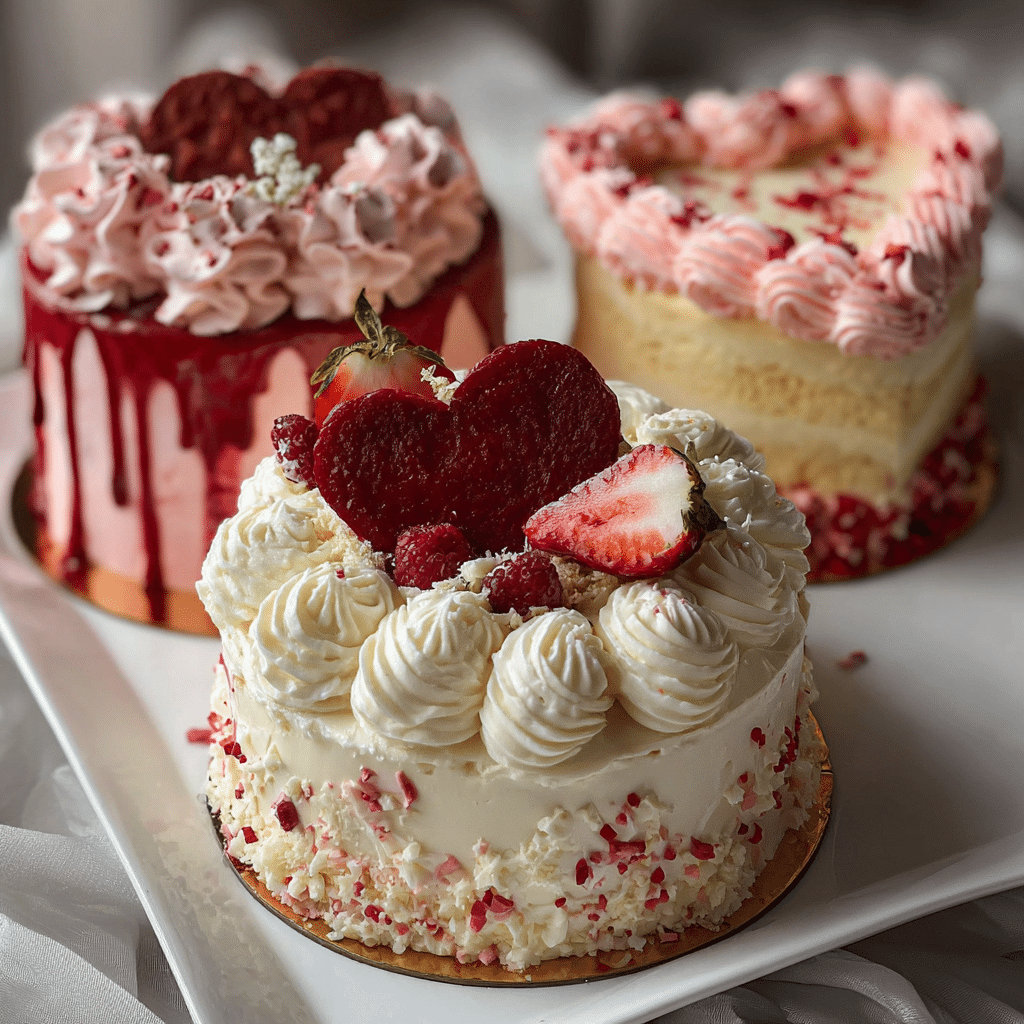
Serving Suggestions for Valentine’s Day Cakes
Presentation matters almost as much as taste when serving Valentine’s Day cakes. These pairing ideas create a complete romantic experience.
Plating Techniques:
Serve individual slices on white plates for clean presentation that makes colors pop. Drizzle raspberry or chocolate sauce in decorative patterns on the plate before adding cake. Add a small scoop of vanilla ice cream or dollop of whipped cream alongside each slice. Garnish with fresh berries, mint leaves, or edible flowers. Dust with powdered sugar using a small sieve for a delicate finishing touch.
Beverage Pairings:
Serve Valentine’s Day cakes with freshly brewed coffee or espresso, especially with chocolate varieties. Hot chocolate with marshmallows pairs wonderfully with lighter vanilla or fruit cakes. Herbal tea like chamomile or earl grey complements lemon or berry flavors. For an elevated experience, serve dessert with sparkling cider or non-grape sparkling juice in champagne flutes.
Complete Dessert Experience:
Create a dessert board featuring your Valentine’s Day cake as the centerpiece surrounded by chocolate-covered strawberries, truffles, and fresh fruit. Set a romantic mood with candles, soft music, and dimmed lighting. Use your best dishes and cloth napkins to show the occasion matters. Consider serving smaller portions these rich Valentine’s Day cakes are satisfying in modest slices.
Complementary Menu Items:
If you’re planning a full Valentine’s Day meal, serve lighter appetizers before dessert. Try our https://dishfoody.com/heart-shaped-bruschetta-appetizers/ for a festive starter that won’t overshadow your cake. Balance rich, chocolate Valentine’s Day cakes with a savory, lighter main course. Keep the meal focused on your loved one with intimate portions that encourage conversation rather than overwhelming with too much food.
FAQs About Valentine’s Day Cakes
Common questions answered to ensure your Valentine’s Day baking success. These solutions address the challenges home bakers face most frequently.
Can I make Valentine’s Day cakes ahead of time?
Yes! Bake cake layers 2-3 days in advance, wrap tightly in plastic wrap, and store at room temperature or refrigerate. You can also freeze layers up to 3 months ahead. Frost the cake 1-2 days before Valentine’s Day and store in the refrigerator, bringing to room temperature 1 hour before serving. This make-ahead approach reduces stress and actually improves flavor as it allows time for flavors to meld.
How do I prevent my Valentine’s Day cakes from sticking to the pan?
Grease pans thoroughly with butter or baking spray, making sure to reach all corners and crevices. Line the bottom with parchment paper cut to fit exactly. For extra insurance, dust the greased pan with a light coating of flour, tapping out the excess. Don’t skip the cooling time in the pan—10-15 minutes allows the structure to set before turning out.
What if my cake layers are domed instead of flat?
Use cake strips soaked in water and wrapped around pans during baking to promote even rising. If doming still occurs, level layers by using a long serrated knife or cake leveler to trim the dome, creating flat surfaces that stack easily. Save the trimmed cake pieces for making cake pops or simply snacking.
How do I fix frosting that’s too thin or too thick?
If your frosting is too thin, add more powdered sugar ¼ cup at a time until you reach the desired consistency. If it’s too thick to spread smoothly, add cream or milk 1 teaspoon at a time while mixing. Temperature also affects consistency if buttercream is too soft, refrigerate for 15-20 minutes to firm up. If it’s too firm, let it sit at room temperature or beat in a tiny bit of softened butter.
Can I use box mix for Valentine’s Day cakes?
Absolutely! Enhance box mix by replacing water with milk for richer flavor, adding an extra egg for better structure, and including a teaspoon of vanilla extract. Use melted butter instead of oil for improved taste. The focus should be on the love you put into decorating and presenting the cake, not whether you started from scratch.
How do I transport Valentine’s Day cakes safely?
Chill the frosted cake thoroughly so frosting firms up. Place on a sturdy cake board slightly larger than the cake base. Put the cake in a large, flat-bottomed box or cake carrier. If you don’t have a cake carrier, invert a large box over the cake and secure it to the board. Keep the cake level during transport and avoid sudden stops or sharp turns. Transport in the coolest part of your vehicle, never in a hot trunk.
What’s the best way to cut clean slices of Valentine’s Day cakes?
Use a long, thin knife and warm it under hot water, then wipe dry before each cut. Make smooth, downward motions rather than sawing back and forth. Wipe the knife clean between each slice. For layered cakes, cut with a gentle rocking motion to preserve the layers. A cake server or offset spatula helps transfer slices to plates without breaking.
How can I make my Valentine’s Day cakes more impressive without advanced skills?
Focus on simple, elegant decorations rather than complex piping. Fresh flowers, berries, or chocolate shavings create stunning visual impact with minimal skill required. Use a turntable and offset spatula for smooth frosting. Create a naked or semi-naked cake style by applying a thin layer of frosting that allows the layers to show through this looks intentionally rustic and beautiful. Add a simple ganache drip around the edges for dramatic effect with little effort.
Conclusion
Valentine’s Day cakes offer the perfect way to show someone you care through the thoughtful act of baking.
PrintValentines Day Cakes: 15 Sweet Recipes to Win Their Heart
A festive Valentine’s Day cake that’s soft, fluffy, and beautifully decorated in shades of pink and red perfect for celebrating love with a classic vanilla cake and creamy buttercream frosting.
- Prep Time: 25 mins
- Cook Time: 30 mins
- Total Time: 55 mins
- Yield: 10 servings 1x
- Category: Dessert
- Method: Baking
- Cuisine: American
- Diet: Vegetarian
Ingredients
- Cake:
- 2 1/2 cups all-purpose flour
- 2 1/2 tsp baking powder
- 1/2 tsp salt
- 1 cup unsalted butter, softened
- 1 1/2 cups granulated sugar
- 4 large eggs
- 1 tbsp vanilla extract
- 1 cup milk
- Pink or red food coloring
- Buttercream Frosting:
- 1 cup unsalted butter, softened
- 3 cups powdered sugar
- 2–3 tbsp heavy cream or milk
- 1 tsp vanilla extract
- Pink or red food coloring
- Valentine sprinkles or decorations
Instructions
- 1. Preheat oven to 350°F (175°C) and grease two 8-inch round cake pans.
- 2. In a bowl, whisk flour, baking powder, and salt.
- 3. In a large bowl, cream butter and sugar until light and fluffy.
- 4. Beat in eggs one at a time, then add vanilla.
- 5. Alternate adding dry ingredients and milk until smooth.
- 6. Mix in food coloring to desired shade.
- 7. Divide batter evenly between pans.
- 8. Bake for 25–30 minutes until a toothpick comes out clean.
- 9. Cool cakes completely.
- 10. Beat butter for frosting until creamy.
- 11. Add powdered sugar, cream, vanilla, and food coloring and beat until fluffy.
- 12. Frost cake layers and decorate with Valentine sprinkles.
Notes
- Use heart-shaped pans for extra Valentine flair.
- Cake layers can be baked a day ahead.
- Customize flavors with strawberry or chocolate extracts.
Nutrition
- Serving Size: 1 slice
- Calories: 420
- Sugar: 34g
- Sodium: 220mg
- Fat: 22g
- Saturated Fat: 13g
- Unsaturated Fat: 8g
- Trans Fat: 0g
- Carbohydrates: 50g
- Fiber: 1g
- Protein: 5g
- Cholesterol: 95mg
Keywords: valentines day cake, romantic cake, pink cake, holiday dessert