

Sheet Pan Lemon Herb Chicken and Veggies has become my absolute go-to when I’m tired of standing over multiple pots and pans after a long day. There’s something magical about throwing everything onto one pan, sliding it into the oven, and coming back to a complete, delicious meal that doesn’t leave your kitchen looking like a disaster zone. No more juggling timers, no more washing mountains of dishes, and definitely no more dry, overcooked chicken that makes everyone reach for extra sauce just to get through dinner.
Hi, I’m Sam from dishfoody.com, and I developed this recipe during one of those chaotic weeks when work deadlines collided with family commitments, and I desperately needed something that would bring everyone together at the table without keeping me chained to the stove. This Sheet Pan Lemon Herb Chicken and Veggies became our family’s saving grace, delivering bright, sunny flavors that make even the dreariest Tuesday feel a little more special. The lemon brings a refreshing zing, the herbs add depth and aroma, and everything roasts together into caramelized perfection.
Having experimented with sheet pan dinners for years, I’ve learned exactly what makes them work beautifully versus turning into a soggy mess or unevenly cooked disappointment. The key is understanding your ingredient sizes, oven temperature, and that perfect balance of moisture and heat that creates golden-brown edges while keeping your chicken juicy and vegetables tender-crisp.
In this complete guide, I’ll walk you through selecting the best chicken cuts for sheet pan cooking, share my tested technique for getting perfectly cooked protein and vegetables every single time, reveal my secret lemon herb mixture that makes this dish sing, and answer all those questions that pop up when you’re standing in front of your oven wondering if everything’s cooking properly. You’ll also discover meal prep strategies, flavor variations to keep this recipe exciting week after week, and practical tips that make this foolproof even for complete beginners.
Why This Sheet Pan Lemon Herb Chicken and Veggies Works
This Sheet Pan Lemon Herb Chicken and Veggies recipe has earned its spot in my weekly rotation for several compelling reasons that go beyond just convenience. The beauty of this approach lies in how the chicken and vegetables cook together, allowing the flavors to mingle and intensify while the lemon juice and olive oil create a natural sauce that keeps everything moist and flavorful.
Uses affordable, accessible ingredients: You don’t need specialty items or expensive cuts to make this shine. Standard chicken pieces, everyday vegetables like potatoes, carrots, and bell peppers, plus basic pantry herbs create restaurant-quality results. I’ve made this countless times with whatever vegetables were sitting in my crisper drawer, and it always works beautifully.
Ready in just 30-40 minutes total: From the moment you start prepping to pulling a complete dinner from the oven, you’re looking at minimal active time. The oven does the heavy lifting while you help kids with homework, set the table, or simply take a moment to breathe after a hectic day.
One pan means easy cleanup: This might sound trivial until you’ve faced a sink full of dishes on a weeknight when all you want is to collapse on the couch. With just one sheet pan, a cutting board, and maybe a mixing bowl, cleanup becomes almost effortless. I often line my pan with parchment paper, making it even simpler.
Naturally balanced meal: You’re getting lean protein, fiber-rich vegetables, and healthy fats all in one dish. There’s no need to think about side dishes or balancing your plate. Everything you need is right there, roasted to perfection with complementary flavors.
Infinitely customizable: Once you master the basic technique, you can swap vegetables based on seasons, preferences, or what’s on sale. The lemon herb foundation works with countless variations, meaning you’ll never get bored with this formula.
Perfect for meal prep and leftovers: This Sheet Pan Lemon Herb Chicken and Veggies reheats remarkably well, making it ideal for batch cooking on Sunday and enjoying throughout the week. The flavors actually deepen after a day in the refrigerator.
Choosing the Right Chicken for Sheet Pan Lemon Herb Chicken and Veggies
The chicken you select makes an enormous difference in how your Sheet Pan Lemon Herb Chicken and Veggies turns out. I’ve tested this recipe with every cut imaginable, and I’m sharing exactly what I’ve learned so you can make the best choice for your family.
Best Chicken Cuts for This Sheet Pan Recipe
Bone-in, skin-on chicken thighs are my absolute favorite for this Sheet Pan Lemon Herb Chicken and Veggies. They stay incredibly moist even if you slightly overcook them, the skin crisps up beautifully in the oven’s dry heat, and the bones add extra flavor while helping the meat cook evenly. Thighs also tend to be more budget-friendly than breasts, making them perfect for feeding a family without breaking the bank.
Chicken drumsticks work wonderfully too, especially if you’re cooking for kids who love eating with their hands. They take roughly the same cooking time as thighs and deliver that same juicy, forgiving texture. The higher fat content means they’re practically foolproof.
Boneless, skinless chicken breasts can absolutely work in this Sheet Pan Lemon Herb Chicken and Veggies, but they require more attention. I recommend pounding them to even thickness (about 3/4 inch throughout) so they cook uniformly, and I pull them from the oven right at 165°F internal temperature to prevent dryness. The marinade helps tremendously with keeping breasts moist.
Chicken tenderloins cook faster than other cuts, so if you’re using them, either add them to the pan 10-15 minutes after the vegetables start roasting, or cut your vegetables smaller so everything finishes together. They’re great for kids or anyone who prefers milder, more tender pieces.
Buying Tips for Sheet Pan Lemon Herb Chicken and Veggies
When shopping for chicken for your Sheet Pan Lemon Herb Chicken and Veggies, look for pieces that are similar in size so they cook evenly. If your package has one huge thigh and several smaller ones, save the large one for another use or plan to check it separately for doneness.
Fresh chicken should have a subtle smell, not anything sour or off-putting. The flesh should look plump and moist, not dry or grayish. If you’re buying skin-on pieces, check that the skin isn’t torn or damaged, as intact skin protects the meat and crisps better.
I always check the sell-by date and try to cook chicken within a day or two of purchasing, or I freeze it immediately if I’m not using it right away. Don’t be afraid to ask the butcher if you have questions about which cut would work best or if they can provide pieces of similar size.
Organic, free-range, or air-chilled chicken often has better texture and flavor, but conventional chicken works perfectly fine in this recipe. Choose what fits your budget and values.
Chicken Substitutions for Sheet Pan Lemon Herb Chicken and Veggies
If you can’t find your preferred cut or want to switch things up, here are substitutions that work beautifully: swap chicken thighs for drumsticks using the same cooking time and temperature. Replace chicken breasts with turkey cutlets, though watch them carefully as turkey can dry out even faster. Bone-in pieces can substitute for boneless by adding about 10 minutes to the cooking time and checking for that 165°F internal temperature. You can even mix different cuts on the same pan if you monitor them individually, pulling breasts out earlier than thighs if needed.
Ingredients & Prep for Sheet Pan Lemon Herb Chicken and Veggies
Getting your ingredients prepped properly makes the difference between a Sheet Pan Lemon Herb Chicken and Veggies that’s merely good and one that’s absolutely spectacular. I’m walking you through exactly what you need and how to prepare everything for the best possible results.
Chicken Prep Essentials for Sheet Pan Lemon Herb Chicken and Veggies
Pat the chicken completely dry with paper towels before doing anything else. This single step makes an enormous difference in getting crispy skin and proper browning. Moisture is the enemy of crispiness, so take an extra moment to ensure every piece is thoroughly dried.
Bring chicken to room temperature by setting it out about 20-30 minutes before cooking. Cold chicken straight from the refrigerator cooks unevenly, with the outside potentially overcooking before the inside reaches safe temperature. Room temperature chicken cooks more uniformly and stays juicier.
Trim excess fat if desired, though I usually leave a bit on thighs since it renders during cooking and adds flavor. Remove any weird bits or loose skin that might burn.
Season under the skin if you’re using skin-on pieces. Gently loosen the skin with your fingers and rub some of the herb mixture directly on the meat. This infuses incredible flavor while the skin still crisps beautifully on top.
Lemon Herb Marinade for Sheet Pan Lemon Herb Chicken and Veggies
This is where the magic happens in your Sheet Pan Lemon Herb Chicken and Veggies. The marinade does double duty, flavoring the chicken while creating a delicious coating for the vegetables.
Fresh lemon juice (from 2-3 lemons, about 1/3 cup): Provides bright acidity that tenderizes the chicken and cuts through the richness. Always use fresh lemons, never bottled juice, for the best flavor.
Olive oil (1/3 cup): Creates moisture, helps herbs stick to the chicken and vegetables, and promotes browning. Extra virgin olive oil adds more flavor, but regular olive oil works fine if that’s what you have.
Fresh garlic (4-5 cloves, minced): Adds pungent, savory depth. Fresh garlic is non-negotiable here; the jarred stuff doesn’t have the same impact.
Fresh herbs (2 tablespoons total of rosemary, thyme, and oregano): Fresh herbs create vibrant, aromatic flavor that dried herbs simply can’t match. If you must use dried, reduce the amount to 2 teaspoons total since dried herbs are more concentrated.
Dijon mustard (1 tablespoon): Adds tang and helps emulsify the marinade so it clings better to the chicken.
Honey (1 tablespoon): Balances the lemon’s acidity and promotes caramelization during roasting.
Salt and black pepper (1 teaspoon salt, 1/2 teaspoon pepper): Essential for bringing out all the other flavors.
Whisk everything together in a bowl until well combined. Reserve about 1/4 cup of the marinade separately before adding the raw chicken (this reserved portion will be used for the vegetables so there’s no cross-contamination). Let the chicken marinate for at least 15 minutes, though 2-4 hours in the refrigerator is ideal if you have time. I’ve even marinated overnight when planning ahead, which makes the flavors incredibly deep.
Vegetable Prep for Sheet Pan Lemon Herb Chicken and Veggies
The vegetables in your Sheet Pan Lemon Herb Chicken and Veggies need to be cut to the right size so they finish cooking at the same time as the chicken.
Baby potatoes or fingerlings (1.5 pounds, halved or quartered): Cut them so all pieces are roughly 1-inch in size. Potatoes take the longest to cook, so they need to be smaller than you might think.
Carrots (1 pound, cut into 2-inch pieces): Peel and cut on the diagonal for a prettier presentation. If your carrots are thick, halve them lengthwise as well.
Bell peppers (2 large, cut into 1.5-inch pieces): Any color works beautifully. Remove seeds and membranes, then cut into chunky pieces that won’t shrivel too much during roasting.
Red onion (1 large, cut into wedges): Slice the onion through the root into 8 wedges, keeping the root end intact on each piece so they hold together better during cooking.
Zucchini or yellow squash (2 medium, cut into thick half-moons): These cook faster than other vegetables, so cut them slightly larger. I sometimes add these halfway through cooking if I want them less soft.
Green beans or asparagus (optional, 8 ounces, trimmed): These also cook quickly, so add them during the last 15 minutes of roasting.
Toss all your vegetables in the reserved marinade, making sure they’re well coated. The lemon and herbs will caramelize on the vegetables’ edges, creating incredibly flavorful bites.
Step-by-Step Cooking Instructions for Sheet Pan Lemon Herb Chicken and Veggies
This is where everything comes together for your perfect Sheet Pan Lemon Herb Chicken and Veggies. I’ve refined this process through dozens of attempts, and this method delivers consistent, delicious results every single time.
Pre-Cooking Prep for Sheet Pan Lemon Herb Chicken and Veggies
Preheat your oven to 425°F (220°C). This high temperature is crucial for getting crispy chicken skin and caramelized vegetables. Don’t skip preheating; starting with a properly hot oven makes a significant difference.
Position your oven rack in the middle position. Too high and the tops will burn before the insides cook through; too low and you won’t get proper browning.
Prepare your sheet pan by lining it with parchment paper or lightly oiling it. I prefer parchment because it makes cleanup effortless and prevents sticking without adding extra fat. Make sure you’re using a rimmed sheet pan (also called a half-sheet pan or jelly roll pan) that’s approximately 18×13 inches. Smaller pans will be overcrowded, which leads to steaming instead of roasting.
Arrange vegetables first on your prepared sheet pan, spreading them in a single layer. Leave space in the center or create cleared spots for your chicken pieces. Overcrowding is the biggest mistake people make with sheet pan dinners. If everything is piled on top of each other, you’ll end up with soggy, steamed food instead of beautifully roasted, caramelized pieces.
Place marinated chicken on top of and among the vegetables, skin side up if using skin-on pieces. The chicken can sit partially on the vegetables; in fact, the vegetables benefit from the chicken’s rendered fat dripping onto them during cooking.
Season everything with an additional sprinkle of salt and pepper. This seems redundant after marinating, but seasoning right before cooking enhances the final flavor significantly.
Cooking Method for Sheet Pan Lemon Herb Chicken and Veggies
Roast for 35-40 minutes for bone-in chicken pieces, 25-30 minutes for boneless pieces. The exact time depends on the size of your chicken pieces and how crowded your pan is. This is why checking temperature is more reliable than watching the clock.
Rotate the pan halfway through cooking (around the 20-minute mark) to ensure even browning, since most ovens have hot spots. When you rotate, give the vegetables a quick stir to turn them and promote even caramelization.
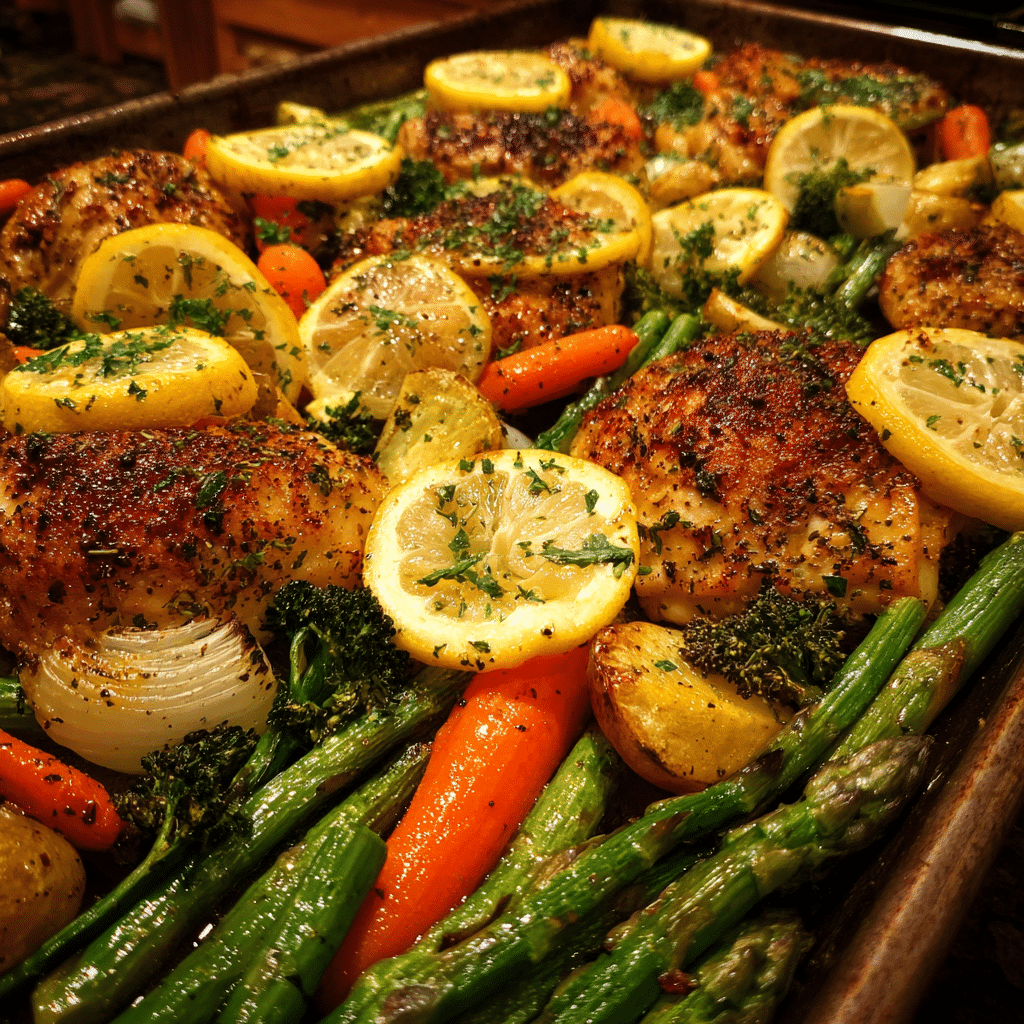
Check for golden brown skin and vegetables with crispy, caramelized edges. The potatoes should be tender when pierced with a fork, and the chicken skin should be deeply golden.
If vegetables are done before chicken, remove them to a serving platter and tent with foil while the chicken finishes. If chicken finishes first (rare, but possible with boneless pieces), remove it and let the vegetables continue roasting.
The high heat in this Sheet Pan Lemon Herb Chicken and Veggies recipe creates beautiful browning through the Maillard reaction, which is what gives roasted food that irresistible savory, slightly sweet, complex flavor. The lemon juice caramelizes, the herbs become aromatic, and everything develops these gorgeous golden edges.
Doneness Check for Sheet Pan Lemon Herb Chicken and Veggies
Use a meat thermometer to check your chicken’s internal temperature. This is the only truly reliable way to know when chicken is safely cooked without overcooking it into dry, tough leather. Insert the thermometer into the thickest part of the chicken, avoiding bones which conduct heat and give false readings.
For chicken, aim for 165°F (74°C) as the minimum safe internal temperature. I actually pull bone-in pieces at 160°F because the temperature will continue rising 5 degrees during resting, and this prevents overcooking. Boneless pieces have less carryover cooking, so I pull them right at 165°F.
Check multiple pieces if they’re different sizes. Your largest piece is what determines when everything is done.
Visual cues are helpful but not foolproof: juices should run clear when pierced (not pink or bloody), the meat should feel firm when pressed (not squishy), and if you cut into a piece, the flesh should be opaque white throughout with no translucent pink areas.
For the vegetables in your Sheet Pan Lemon Herb Chicken and Veggies, doneness is more about preference. Potatoes should be completely tender when pierced with a fork. Other vegetables should be tender but still have slight resistance rather than being mushy.
Resting for Sheet Pan Lemon Herb Chicken and Veggies
Let the chicken rest for 5-10 minutes after removing from the oven. This isn’t optional if you want juicy chicken. When chicken cooks, the heat drives moisture toward the center. Resting allows the juices to redistribute throughout the meat. If you cut into chicken immediately after cooking, those juices run out onto the cutting board instead of staying in the meat where you want them.
Tent loosely with aluminum foil during resting to keep everything warm. Don’t wrap tightly or you’ll steam the skin and lose that crispy texture you worked to achieve.
Use resting time productively by tossing together a simple salad, warming bread, or just getting everyone to the table. This brief pause makes the meal better without requiring any additional work from you.
The vegetables can sit on the pan during resting; their residual heat will continue cooking them slightly, so factor that in if they’re already at your preferred tenderness.
Pro Tips for Perfect Sheet Pan Lemon Herb Chicken and Veggies
After making this Sheet Pan Lemon Herb Chicken and Veggies literally hundreds of times, I’ve discovered some game-changing tricks that elevate this from a simple weeknight dinner to something truly special.
Avoiding Dry, Overcooked Chicken in Sheet Pan Lemon Herb Chicken and Veggies
Don’t overcook, even by a few degrees. Chicken, especially white meat, goes from perfectly juicy to dry and disappointing in a surprisingly narrow temperature window. This is why I’m so insistent about using a meat thermometer rather than relying on cooking times alone.
Brine the chicken for even juicier results. A simple brine of 1/4 cup salt dissolved in 4 cups of water, with the chicken submerged for 2-4 hours before marinating, makes an enormous difference in moisture retention. The salt restructures the proteins so they hold onto water better during cooking.
Use skin-on chicken when possible. The skin creates a protective barrier that shields the meat from the oven’s direct heat, resulting in more even cooking and better moisture retention. Even if you don’t eat the skin, cooking with it on helps significantly.
Space chicken pieces properly on your sheet pan. When pieces touch, they steam rather than roast, which interferes with proper browning and can lead to uneven cooking. If you’re cooking for a crowd, use two sheet pans rather than overcrowding one.
Add a splash of broth or water to the pan if you notice things looking dry during cooking. The liquid will evaporate but creates steam that helps everything cook more gently.
Tool Recommendations for Sheet Pan Lemon Herb Chicken and Veggies
Invest in a good instant-read meat thermometer. This is the single most important tool for consistently perfect chicken. Digital thermometers give you a reading in seconds and are worth every penny. I keep mine within arm’s reach of the stove.
Use heavy-gauge aluminum sheet pans that won’t warp in high heat. Thin, cheap pans buckle in hot ovens, creating uneven cooking surfaces where things roll to one side. A quality half-sheet pan (13×18 inches) is incredibly versatile and will last decades.
Keep parchment paper on hand for the easiest cleanup imaginable. You can lift everything off the pan using the parchment paper edges, then basically just wipe your pan clean. It’s a simple convenience that makes weeknight cooking so much more appealing.
A large mixing bowl makes tossing vegetables in the marinade much easier than trying to do it directly on the sheet pan.
Kitchen tongs are perfect for rotating vegetables halfway through cooking and for transferring pieces to serving platters without dropping them.
PrintSheet Pan Lemon Herb Chicken and Veggies: Best One Pan Recipe
A bright and flavorful sheet pan lemon herb chicken with tender roasted vegetables an easy, healthy one-pan dinner perfect for busy weeknights.
- Prep Time: 10 mins
- Cook Time: 30 mins
- Total Time: 40 mins
- Yield: 4 servings 1x
- Category: Dinner
- Method: Sheet Pan
- Cuisine: Mediterranean-Inspired
Ingredients
- 4 boneless skinless chicken breasts
- 2 tbsp olive oil
- 1 lemon, sliced
- 2 cups baby potatoes, halved
- 1 cup baby carrots
- 1 cup broccoli florets
- 3 garlic cloves, minced
- 1 tsp dried oregano
- 1 tsp dried thyme
- 1/2 tsp paprika
- 1/2 tsp salt
- 1/4 tsp black pepper
- Fresh parsley for garnish
Instructions
- 1. Preheat oven to 400°F (205°C) and line a large sheet pan with parchment paper.
- 2. Place chicken breasts on the sheet pan and arrange vegetables around them.
- 3. Drizzle olive oil over everything.
- 4. Sprinkle garlic, oregano, thyme, paprika, salt, and pepper evenly.
- 5. Toss vegetables gently to coat.
- 6. Place lemon slices over the chicken.
- 7. Bake for 25–30 minutes until chicken is cooked through and vegetables are tender.
- 8. Broil for 2–3 minutes if desired for extra browning.
- 9. Garnish with fresh parsley and serve.
Notes
- Swap vegetables based on season or preference.
- Use bone-in chicken for extra flavor (adjust cooking time).
- Leftovers are great for meal prep lunches.
Nutrition
- Serving Size: 1 chicken breast with veggies
- Calories: 410
- Sugar: 5g
- Sodium: 460mg
- Fat: 15g
- Saturated Fat: 3g
- Unsaturated Fat: 11g
- Trans Fat: 0g
- Carbohydrates: 28g
- Fiber: 4g
- Protein: 42g
- Cholesterol: 115mg
Keywords: sheet pan lemon herb chicken, one pan dinner, healthy chicken and veggies, easy weeknight meal